The Great Migration: When to Go, Where to Stay
River crossings, newborn calves and how to time your journey. Our guide to seeing the Serengeti and Maasai Mara at their best.

Quick facts
Where: Serengeti in Tanzania and Maasai Mara in Kenya.
Who: Over a million wildebeest, plus zebra and gazelle.
Timing: Varies each year with the rains. No crossing is guaranteed.
Book: Prime camps fill about a year ahead.
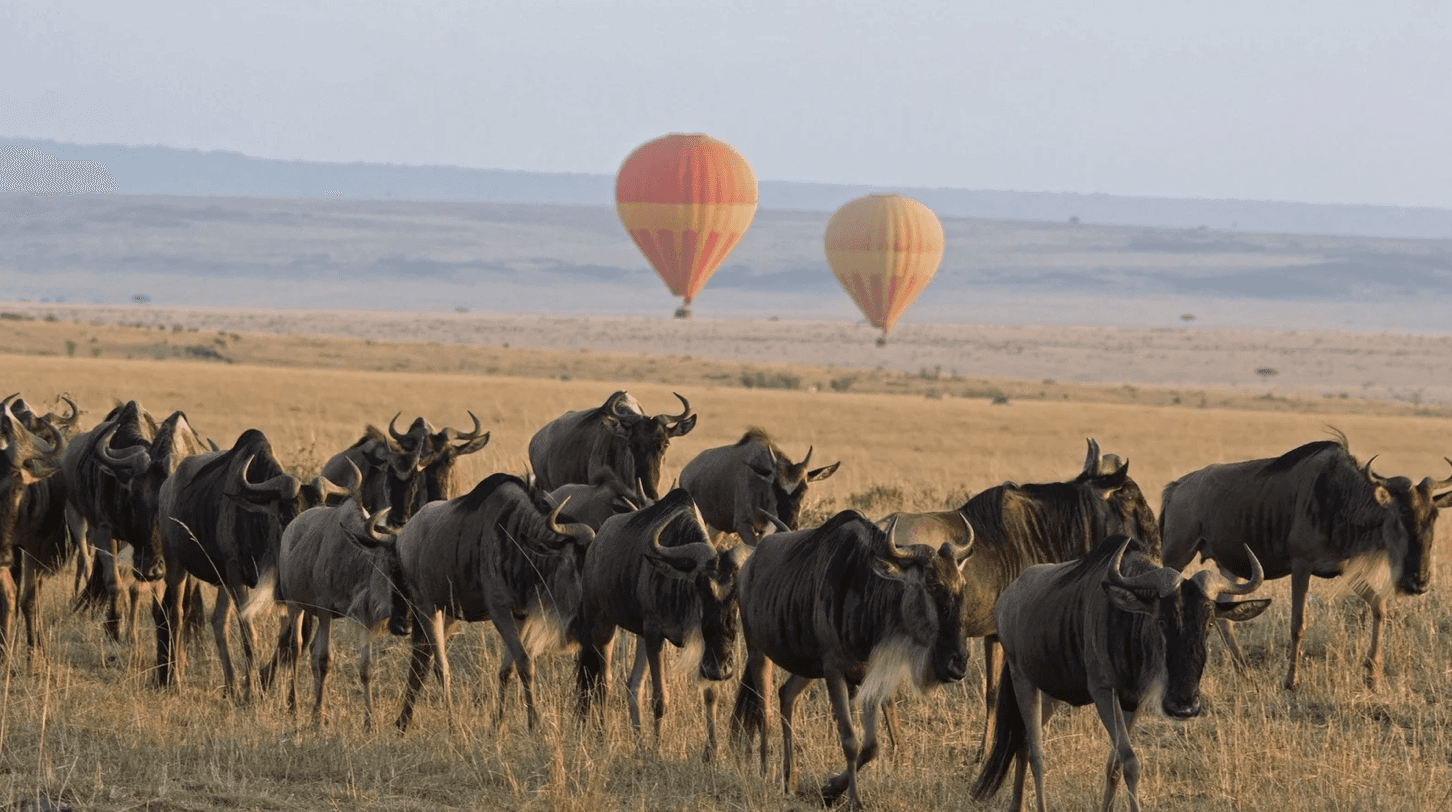
The Great Migration is not a single event. It is a year-round loop in which well over a million wildebeest, along with zebra and gazelle, travel through the Serengeti in Tanzania and the Maasai Mara in Kenya in search of fresh grass. Where you see the herds depends entirely on when you go.
January to March: calving season
The herds gather on the southern plains of the Serengeti and around Ndutu, where tens of thousands of calves are born in a matter of weeks. Predators follow, so the action is constant and the landscape is green. It is intimate, dramatic and often less crowded than the river crossings.
April to June: the long trek north
As the grass dries, the herds begin to move toward the western corridor and the north. This is the green season, with fewer visitors and lower rates, and it rewards travelers who prefer quiet to spectacle.
July to October: the river crossings
Between roughly July and October the herds reach the Mara and Grumeti rivers, where thousands of animals plunge into crocodile-filled water. It is the scene most people picture when they think of the migration, and it is also the busiest and most competitive season. The best camps fill a year or more in advance.
Where to stay
Small camps close to the crossing points save hours of driving and let you stay with a sighting as it unfolds. Mobile camps follow the herds through the year. Private vehicles and flexible schedules matter even more here, because the herd decides when the crossing begins, not you. For one memorable morning, consider a hot-air balloon flight at dawn over the plains.
Our advice
Choose your priority first. If you want drama, plan for the crossings. If you want newborn animals and open space, aim for calving season. Many of our guests pair East Africa with the Okavango Delta, which gives them the best of both landscapes in a single trip.
How does the migration work?
The herds follow the rains and fresh grass in a rough clockwise loop across the Serengeti-Mara ecosystem. It is a continuous cycle rather than a single event, with different chapters at different times. Because rainfall varies, no two years are identical.
What happens in the southern Serengeti?
Around the start of the year, herds gather on the short-grass plains of the south, and calving takes place in a concentrated window. Predators follow, and sightings of lion and cheetah can be exceptional.
What about the western corridor and central Serengeti?
As the plains dry out, herds move north and west. The Grumeti River offers early crossings, and the central Serengeti around Seronera is productive year-round for big cats.
When do the Mara River crossings happen?
Crossings typically occur from around July to October, as herds move between the Serengeti and the Mara. Crossings are spontaneous and may involve long waits, which is why a private guide and flexible camp matter. See Mara River Crossings.
Where should you stay?
Choose camps that match the herds' position in your month. Mobile camps follow the animals, while permanent camps sit in prime locations. Exclusive conservancies on the edge of the Mara allow quieter viewing. See Laikipia and conservancies and Serengeti or Maasai Mara?.
Can you watch from a balloon?
Yes. A dawn balloon flight offers a unique view of the plains. See Hot-Air Balloon Safari.
How long should you stay?
Plan at least five to seven nights across two camps so you do not miss the herds. See How Many Days Do You Need?.
What else is nearby?
Add Ngorongoro, Tarangire and Amboseli. See Ngorongoro Crater, Tarangire and Amboseli.
Our migration journeys
See The Great Migration and Golden Serengeti. Talk to a specialist.
What do the herds face along the way?
The migration is a perilous journey, with predators, river crossings and drought. Lion prides, hyena clans and crocodiles all play a role. See Hyenas and Hippos and Crocodiles.
Tips for a successful migration trip
Book early, stay flexible, choose a guide who knows the river, and give yourself enough nights. Do not plan to see a crossing on a single day. Patience is rewarded, and the herds are spectacular even without a crossing.
Frequently Asked Questions
When is the best time to see the migration?
It depends on what you want to see. From roughly January to March the herds calve on the short-grass plains of the southern Serengeti around Ndutu, which brings newborns and intense predator action. From about July to October they reach the north and cross the Mara River into Kenya's Maasai Mara, which is when the famous river crossings happen. We match your dates to the right area so you are where the herds are likely to be.
Is a river crossing guaranteed?
No. Crossings are spontaneous: herds can gather on the riverbank for hours or days and then turn back, so no one can promise a crossing on a given day. You improve your odds by staying three or four nights at a camp close to the main crossing points and by keeping your game drives flexible. Our guides read the herds and the river and will move you to where a crossing looks most likely.
Which is better, Serengeti or Mara?
Neither is better; they suit different trips. Tanzania's Serengeti is vast and hosts the herds for most of the year, including the calving season, while Kenya's Maasai Mara is smaller and sees the migration mainly from about July to October. The Mara's private conservancies limit vehicle numbers and allow off-road and night drives, so many guests combine both countries in one journey.
How many wildebeest are there?
The migration involves roughly 1.5 million wildebeest, moving with hundreds of thousands of zebra and gazelle. They travel in a loop of close to 1,000 kilometres a year through the Serengeti and the Maasai Mara, following the rains and fresh grass. Lions, cheetahs, hyenas and crocodiles follow them, which is why this is one of the best wildlife spectacles on earth.
Do I need to book early?
Yes, especially for July to October and the calving months. The best-placed camps near the crossing points and in the Mara conservancies are small and often fill nine to twelve months ahead, and light-aircraft seats sell out with them. Booking early gives you the widest choice of camps and dates; for later bookings we can still find good options, but with less flexibility.
YOUR NEXT JOURNEY
Where will Africa take you next?
Where will Africa take you next?
Every route is private and tailored to you. Choose one to explore, or let us design yours from scratch.


